

How to Check RERA and Legal Documents Before Booking a Property
 By Atul Projects
 Prerendered

1. Why Legal Due Diligence Matters Before Booking a Property
The real estate market in India, especially in Tier I and II cities have saturated long ago. HNIs and Ultra HNIs are confused about which location to target and what kind of home to invest in. But, keeping that aside, there is another factor looming: the legal matters. The reason being most of them are aware of the fraud, delays, and unclear ownership stories. So, this is where legal due diligence becomes an essential factor, which shields one from financial loss.
Subsequently, RERA was introduced by the Rajya Sabha in 2016 to protect homebuyers by mandating accountability and transparency. And in this column, we will unravel some key insights into the same, which will help you make an informed decision in your next purchase. So, if you are looking for a one-stop guide on how to check RERA for a project, this is it.
2. Understanding RERA: What Every Homebuyer Must Know
RERA is a central law enacted to regulate the real estate sector, curb malpractices, and safeguard buyers. Before RERA, developers often delayed projects indefinitely or diverted funds, leaving buyers in limbo.
It became active in 2017 and now covers all states through each state's respective RERA authority. The act was created to protect buyers from improper behavior, ensure that projects are completed on time, and create standard agreements between buyers and builders. It directs builders that 70% of the buyer’s funds must stay within a separate project account, and every builder must provide a quarterly report on the progress of the project. Therefore, both the buyer and the builder must follow the standards established by RERA.
So, for discerning buyers like you, RERA compliance of a development should be a non-negotiable factor before any sort of commitment.
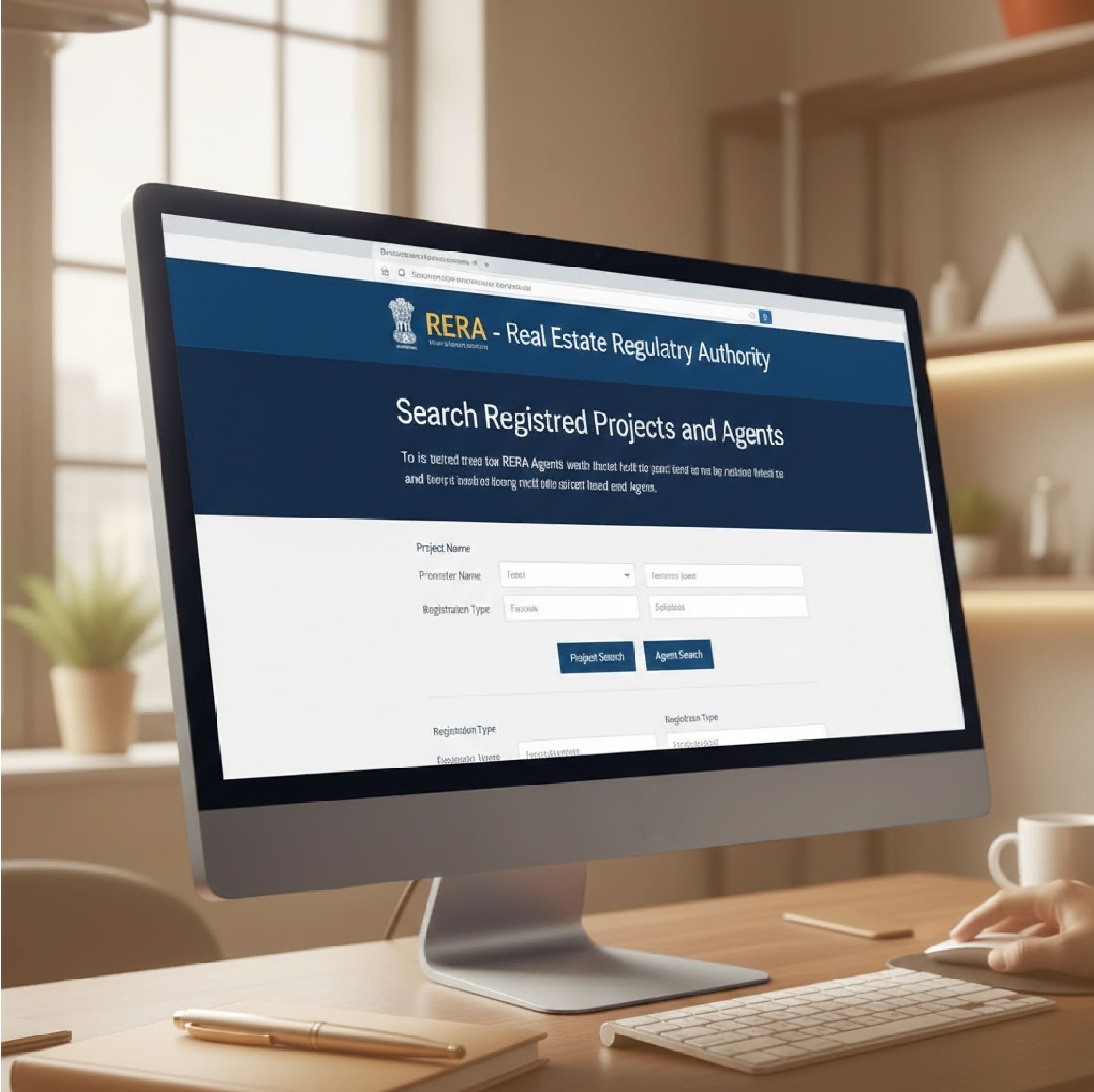
3. How to Check RERA Registration of a Project
It doesn’t require a legal background to conduct the same, and neither involves any charges. Follow this step-by-step process:
• Go to the official website of RERA for your state (for example: from maharera.mahaonline.gov.in for Maharashtra).
• Learn how to access the 'Registered Projects' page within the site; then enter by providing the name of the project, the developer, or registration number to see their status if they have already registered the project or only applied.
Don’t forget to cross-check these essentials:
• Project registration number: Note down the Unique Identifier.
• Developer name and credentials: Confirm legitimacy via platforms like Flacon eBiz, ZaubaCorp, etc.
• Approved layout and plans: Probably get an architect or a civil engineer to match what is advertised.
• Timelines and Completion Dates: Ensure the project has reasonable timeframes assigned for completion, and if any extensions will be granted for those timeframes.
When conducting the real estate legal due diligence, look for signs that something is wrong. Examples of these are; inconsistencies in terms of details, expired registrations and/or history of consistent delays
4. Key Legal Documents to Verify Before Booking a Property
You should have a property document checklist prior to booking a property, and you should scrutinize each document carefully. Try to gather certified copies from the developer:
a. Title Deed
This is the foundation of ownership. A clear title deed shows the seller (developer or landowner) has undisputed rights. Check that it's free from liens, inheritance disputes, or government acquisitions via the sub-registrar's office. A grey title can lead to eviction years later.
b. Sale Agreement / Agreement for Sale
This binding contract draws the boundaries. Scrutinize clauses on payment schedule (linked to milestones), possession date, penalties for delays (e.g., interest on payments), and exit options. Ensure it's RERA-compliant and stamped appropriately.
c. Approved Building Plans
The plan of your desired home should be sanctioned by the municipality authorities. By mistake, if you have committed to an unapproved plan, you risk demolition orders. This will leave you with an illegal home.
d. Commencement Certificate
Issued by local bodies, it greenlights the initiation of construction. Without it, the project can't legally begin; so, check for validity.
e. Occupancy Certificate (OC)
OC certifies the building is habitable and safe. It's distinct from a Completion Certificate, which just notes the completion date; OC enables utilities like electricity and water. No OC means no legal possession.
f. Encumbrance Certificate (EC)
From the registrar, this 12-30 year search confirms no loans, mortgages, or dues on the property. A clean EC is your gateway to safe property investment India.

5. Common Legal Mistakes Homebuyers Should Avoid
Potential investors, especially high-net-worth individuals (HNWIs), hurry through their investments that result in multiple abilities to fall into traps resulting from:
a. Verbal representations made by the sales team that are accepted over written representations
b. Not verifying things to "save time" and then having to wait.
c. Not comparing RERA portals with glossy brochures.
d. Taking pre-launch offers with no approval, which you'd be surprised are not regulated.
Mistakes like these can also cause you lakhs of litigation costs, so ensure that you are doing all necessary due diligence according to verifiable facts and not following the hype.
6. How RERA Protects You After Booking a Property
RERA gives control to consumer rights after you’ve made your purchase. The following homebuyer’s rights with respect to RERA will allow homebuyers to:
a. Interests on delays caused (up to 2% per month);
b. Refunds with interest in the event of a withdrawal; and
c. Remuneration for defects.
Additionally, if any project differs from those promised (e.g., carpet areas are smaller than those promised), complaints can be lodged with RERA or the appropriate adjudicating officer by clicking here.
Also, the grievance redressal system is seamless. Online complaints trigger hearings within 60 days. Escalate to the RERA Appellate Tribunal or the High Court if needed. You need to track updates on the portal to follow up on your issue.
7. Why Buying from a Trusted Developer Matters
When you are investing a lump sum amount to build your legacy, dealing with a trusted developer is non-negotiable. You will minimize risks as they facilitate clear documentation, approved plans, and on-time ownership. Moreover, since they stick to compliance factors, it helps you to get rid of the due diligence burden.
At Atul Projects, our practices exemplify this commitment, emphasizing innovation, clarity, and integrity. This propelled us to deliver 100+ projects on time, in and around Mumbai and Pune.
8. Final Checklist Before You Book Your Property
To start off, you can use these essential pointers:
a. Verified RERA registration (number, timelines, approvals).
b. Check that you have reviewed all critical documents (property title deed, purchase agreement, architectural drawings, OC, EC).
c. Find developer history (completed projects, social media reviews & complaints).
d. Compare promises made with actual records.
e. Consulted a lawyer for independent review.
With each tick-off, you go ahead a step closer to securing a safe property investment in India.

9. Final Takeaway: An Informed Buyer Is a Confident Buyer
If you are a buyer, you shouldn’t be committing to any sort of deal without a proper document check. Those papers form the fundamental to your legacy that you are planning to set up. And to bolster your plan, you need a reputed developer who practices transparent operations and will handhold you at every step. Only then do you get long-term peace of mind, which is crucial for your future. Don’t fall for short offers that might shatter your dreams.
Our team at Atul Projects has delivered a testament to legitimate projects since 1972. So, if you are seeking a trustworthy curator of luxury living residential projects in Mumbai, reach out to us today.